Your Business Plan Is a Story: Write One People Actually Want to Read

I have read a lot of business plans. I have written a lot of business plans. And the thing that separates the ones that move people from the ones that collect dust in someone's inbox is not the font, not the financial model, and not how many slides are attached. It is whether the person reading it finishes the first page and wants to keep going.
That is a storytelling problem. And once you see it that way, everything about how you write a business plan changes.

The First Act: Make Me Care
Every great movie opens the same way. You meet the protagonist. You see their world. Within the first ten or fifteen minutes, the director and the actors have done one job: they have made you feel something. You care about this person. You believe in them. And then a problem shows up, usually one only they can solve, and you are hooked.
A business plan works exactly the same way.
The opening section, your vision, your mission, your values, the who-you-are and why-you-are-here part, is your first act. It is where I am deciding whether I trust you enough to keep reading. Not whether your numbers are right. Not whether your go-to-market is clever. Whether I believe in you as the protagonist of this story.
The businesses that got me excited, the ones I fell in love with even when I had reservations about the space, earned that emotional connection early. I have genuinely been drawn into ideas that gave me pause environmentally, or commercially, or logistically, because the person writing the plan understood their vision clearly and communicated it with conviction. They made me see the bigger picture. They built that emotional bridge in the first few pages.
That is the part most business plans skip entirely. They jump straight into the numbers. They assume the reader will connect with a spreadsheet. They will not. Give them a reason to care first, and they will follow you through all the hard parts that come after.

The Montage Nobody Wants to Film
The honest truth about market research: it is the most boring part of the business plan to read, and it is the hardest part to do well. It is the montage. You know the one. Thirty seconds of someone training, reading, failing, getting back up. It compresses months of work into something the audience can absorb quickly.
But what that montage represents is not boring at all. It is proof. It is the part where you show me that you did not just have an idea in the shower. You went out and tested it against reality.
Good market research in a business plan tells me a few specific things. It shows me you understand the landscape: who else is doing this, what they are doing well, where the gaps are. It tells me you have talked to real customers and understand their actual pain points, not the ones you assumed they had. It tells me what the market sizing looks like and, more importantly, what assumptions you are using to build that sizing, because anyone who has done this more than once knows that market sizing is always a forecast. It is educated storytelling about the future.
And that is where most plans trip. They present market data as if it is settled fact. It is not. Everything is imperfect information. The data is always incomplete. The job is not to pretend otherwise; the job is to show me that you understand the assumptions underneath your numbers and that you are watching them.
The research montage in a movie might take thirty seconds. In a business, it might take two or three years. Either way, the point is the same: when you come out the other side, you are not lucky. You are prepared. And prepared people, when they get punched in the face, which they will, stand back up faster.

Go-to-Market as Psychological Warfare
Once I understand the market, I want to know how you are going to enter it. And this is where most plans get generic. They list marketing channels. They talk about social media and partnerships and sales cycles. They miss the actual question.
Go-to-market strategy is psychological. It is about who you are targeting, where they live, what they are feeling, what their specific pain point is, and how much they will pay to solve it. It is about getting to the buyers, the decision-makers, the influencers. It is about the sticky factor: once someone tries what you are selling, why do they not leave?
If your go-to-market section cannot answer those questions with specificity, it is not a strategy. It is a wish list.

The Team: Where Trust Actually Lives
I pay close attention to the team section. Not because I want to count credentials, but because I want to understand whether this group of people knows themselves well enough to win.
The founders or operators who impress me are the ones who can say clearly what they are brilliant at, what they enjoy doing, and where they are going to absolutely knock it out of the park. And then, in the same breath, they can tell me where they are going to struggle, where they need help, and who they are going to bring in to cover those gaps. That kind of self-awareness is rare, and it signals something important: coachability. Willingness to learn. The ability to build trust with people around them.
A team that thinks it can do everything is a risk. A team that knows exactly what it is great at, and builds around the rest, is a bet I will consider making.
The plan should tell me that story. Who is on this team? What do they bring? How do they complement each other? And why should I believe that when something goes sideways, which it will, they are the people who figure it out together instead of pointing fingers?
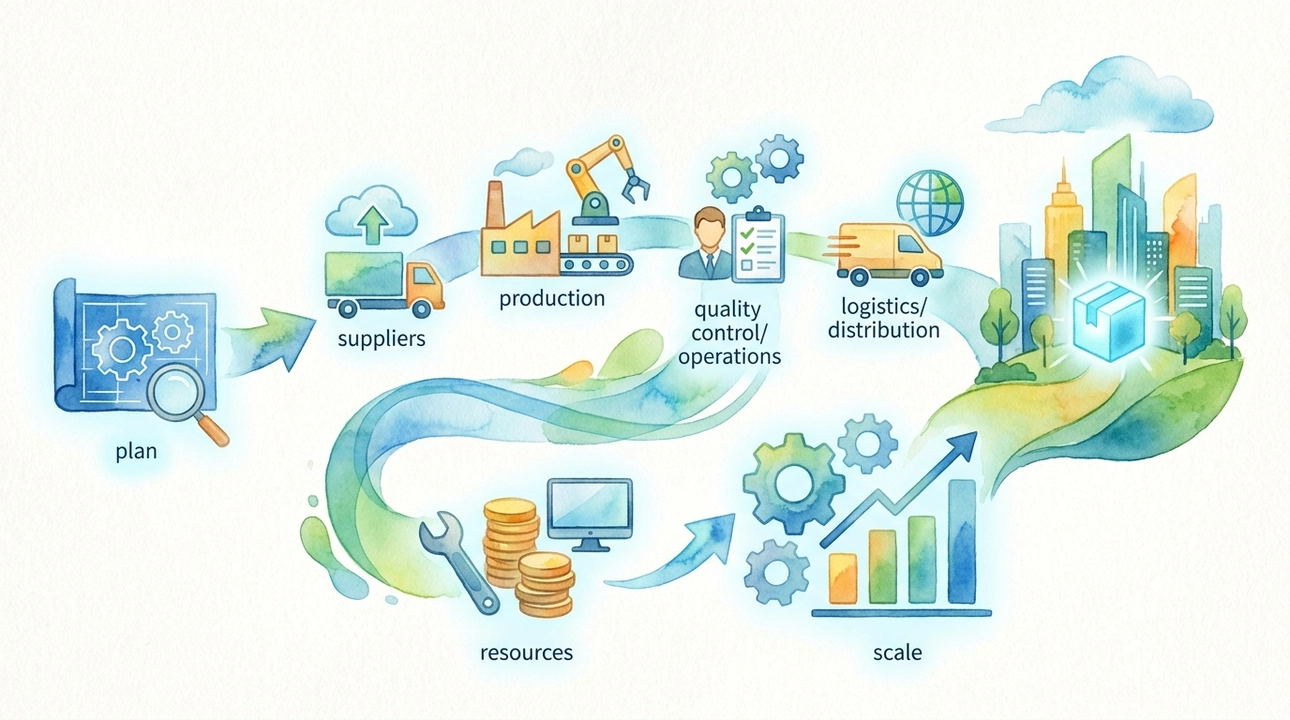
Operations and Execution: How the Heroes Actually Pull It Off
So now I know who the heroes are. I know the market they are walking into and how they plan to reach it. The next question is the one that separates founders who can think from founders who can do. How, exactly, does this get delivered?
This is the scene in the movie where the plan meets the real world. The team is assembled, the mission is clear, and now we watch them move. What are the actual steps? What does the delivery of this product or service look like, from the first input to the last mile? What systems have to be in place, and in what order, before any of it works at scale?
A good operations section maps the global value chain from end to end. It traces the path: where the raw materials or inputs come from, how they move, who touches them, and what happens at each handoff. If you are manufacturing something, I want to know where the components originate, who the suppliers are, and what the lead times look like. If you are delivering a service, I want to understand the workflow, the platforms, and the people required at each stage. The question I am asking underneath all of it is a simple one: can you actually reproduce this, reliably, at volume, without the wheels coming off?
Reproducibility is where most execution stories quietly fall apart. A founder can deliver something brilliant once. Doing it a hundred times, or a thousand, at consistent quality and predictable cost, is a different problem entirely. The operations section should show me that you have thought about that problem. Where are the steps in your delivery chain that depend on one person, one supplier, or one system that has no backup? Where does a delay in one part cascade into a failure somewhere else? Those are the joints in the chain that need reinforcement before you scale, not after.
Resources matter here too, and I want to see you name them plainly. What equipment do you need that you do not yet have? What capital is required to build or access the infrastructure this plan depends on? Are there people on the operations side who are not yet hired, roles that are currently gaps in the machine? A plan that glosses over those questions is not being optimistic; it is being incomplete. The ones that earn trust are the ones that say: here is what we need, here is what we have, and here is the gap we are closing and how.
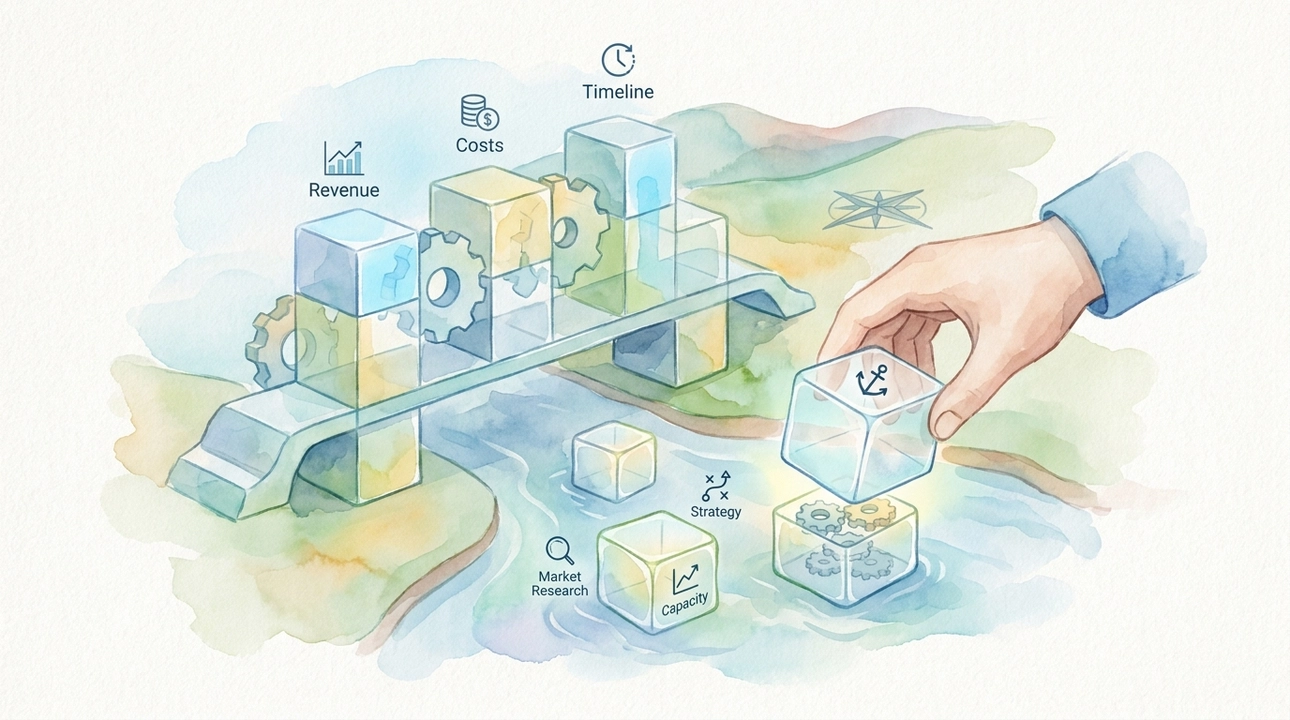
When this section is done well, it does something else: it builds the foundation for everything that comes next. Every cost in the financial model, every revenue assumption, every timeline in the forecast, traces back to a decision made in the operations story. The unit economics only make sense if you understand what it actually costs to produce and deliver one unit. The scaling projections only hold if the systems can be replicated. This is the part of the plan where the assumptions get their roots, and a financial model without those roots is just arithmetic floating in the air.
Get the operations section right, and the financial model is not a leap of faith. It is the natural next scene.
Financial Modeling and the Art of the Honest Assumption
Eventually, we get to the numbers. And this is where I see plans lose credibility fast.
A financial model in a business plan is not a prediction. It is a structured set of assumptions about the future. Revenue projections, cost structures, scaling timelines: all of it is built on assumptions drawn from your market research, your go-to-market strategy, your understanding of your team's capacity, and your operations. The model is only as credible as the assumptions underneath it.
The best plans I have seen are explicit about this. They do not hide their assumptions in a footnote. They surface them. They say: here is what we believe to be true, here is why we believe it, and here is what happens to these numbers if we are wrong. That kind of transparency does not make a plan weaker. It makes it trustworthy.
Because the thing about money and time on paper: it only works on paper. The real world will adjust every number you wrote. The question is whether you built a model that can absorb those adjustments, or whether your entire financial case collapses the moment one assumption shifts.

Risk Analysis: The Part That Shows You Are Actually Ready
The last section most people treat as an afterthought is the one I read most carefully. Risk analysis is not a compliance box you check to show you thought about downside scenarios. It is proof that you understand your own business deeply enough to know where it can break.
Mike Tyson said it well: everyone has a plan until they get punched in the face. He is right. The plan will go sideways. Something will hit you at the worst moment, in front of the most important people. That is not a hypothetical. That is the job.
But the founder who has mapped their risks, who has articulated the assumptions they are most uncertain about, who has thought through the scenarios where their model cracks, that person does not crumble when the punch lands. They hurt. They stagger. They get back on one knee. And then they stand back up, because they already knew this was a possibility and they had some version of a response ready.
Risk analysis also does something else. It opens the door for the reader to help you. When you give someone rich, honest information about where your plan has gaps, they can point to potential weaknesses you have not spotted yet. A business plan is not just a pitch. It is the start of a conversation, and the quality of that conversation depends on how much real information you put on the table.

The Plan That Never Stops Being Written
A business plan is a story about the future. And like any story, it should evolve. New information comes in. Assumptions get tested against reality. The market shifts. The team changes. The financial model gets updated because last quarter taught you something the model did not account for.
The plans that stay alive are the ones built by people who understand that the document is not the destination. It is the thinking made visible. It is how you show someone, whether that is an investor, a partner, a bank, or a new executive you are trying to recruit, that you know your business, you know your gaps, you have done the work, and you are ready to adapt when the world punches back.
If you can make me feel that from the first page, I will read every page after it. And that is when plans stop being documents and start being things people actually get behind.
Write the story. Make it honest. Show me you know what you do not know. That is the business plan worth reading.